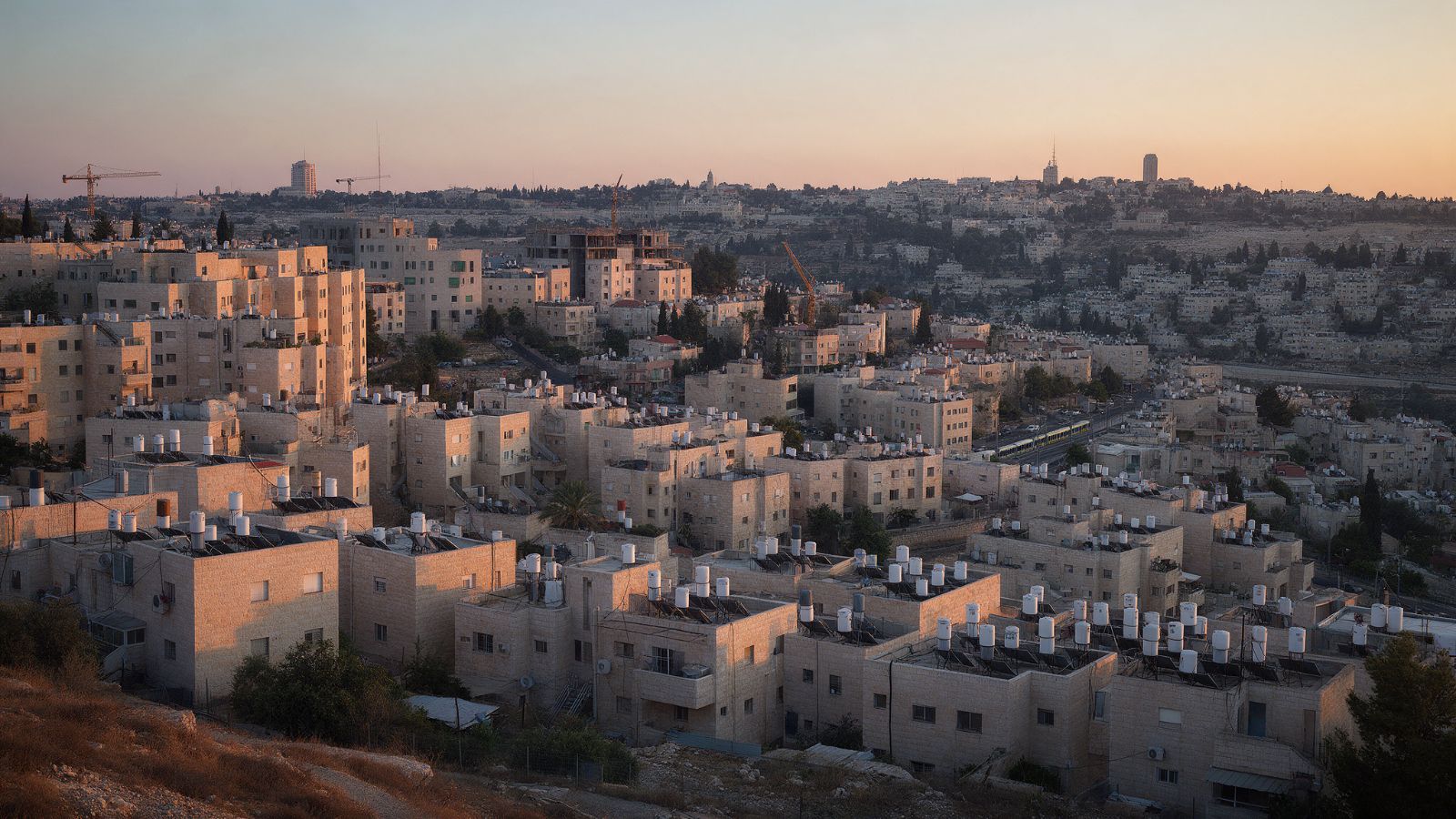
Real Estate Lawyer in Jerusalem: Fees, Local Specifics, English Speakers
Jerusalem is the city where the real estate lawyer has the most to read: Greek Orthodox Patriarchate leases under Rehavia and Talbieh, State and KKL land, century-old stone buildings extended without permits, condominiums never updated, protected neighborhoods, and the largest community of diaspora buyers in the country. Here is what they check, what they cost, and how they work with a buyer in New York, London or Toronto.
The short answer
In Jerusalem, a real estate lawyer charges 0.5 to 1% + 18% VAT on an average price of ₪3.1M (CBS, Q1 2026), i.e. 15,500 ₪ to 31,000 ₪ before VAT, often a flat fee of ₪12,000 to ₪20,000 on second-hand. What they check on top here: Church-leased land under Rehavia, Talbieh and Nayot (leases to 2051, plots sold on in the 2010s), Minhal and KKL leases, stone buildings with unpermitted additions, complex condominiums, the preservation rules of the German Colony and Baka, pinui-binui projects on Derech Hevron and in Kiryat HaYovel, and the particular status of land in East Jerusalem. On ₪3M, purchase tax runs from 5,106 ₪ (oleh) to 240,000 ₪ (non-resident). The city with the most diaspora buyers in Israel also has the highest density of lawyers trained abroad.
The figures to remember, November 2026
- Average price, Jerusalem (Q1 2026)
- ₪3.1M
- Typical ₪/m²
- 28,000–60,000
- Lawyer 0.5–1% on ₪3.1M
- 15,500 ₪–31,000 ₪ + VAT
- Mas rechisha, non-resident, ₪3M
- 240,000 ₪
- Mas rechisha, oleh, ₪3M
- ≈ 5,106 ₪
- Church leases, common expiry
- 2051
What the lawyer checks on top in Jerusalem
The base (nesach Tabu, liens, permits, debts, condominium, the seller’s tax status) is described on the page the real estate lawyer’s role. In Jerusalem, eight city-specific topics come on top.
- Church-leased land. Part of Rehavia, Talbieh, Nayot, the city centre and a few other areas is built on land of the Greek Orthodox Patriarchate (and, elsewhere, of other churches), leased long-term to the KKL or to companies in the 1950s, with expiries often set at 2051. In the 2010s the Patriarchate sold several of these leases on to private companies, leaving owners uncertain about extension terms. The lawyer identifies the current lessor, reads the lease, checks what the bank will accept (loan term aligned with the remaining lease) and tells you what is known and what is not. These properties trade 10 to 25% below freehold.
- Minhal and KKL land. In many neighborhoods built after 1948 (Kiryat HaYovel, Ramot, Gilo, Pisgat Zeev, parts of Katamon and Arnona), the land belongs to the State or the KKL and the owner holds a lease (hakhira) from the Israel Land Authority. The transfer goes through the Minhal, with longer timelines, sometimes consent fees, and a lease to check (remaining term, capitalised or not).
- Stone buildings and unpermitted additions. The 1920s–70s buildings of Rehavia, Baka, Katamon and Nachlaot have almost all been altered: room on the roof, enclosed balcony, converted basement, apartment split in two. The lawyer compares the building permit (heter bniya) and the plans filed at the municipality with the actual state; an unregularised addition can mean a fine, a demolition order, a bank refusal and difficulty reselling.
- Complex condominiums. In older stock, the condominium by-laws (takanon) and the table of shares sometimes date from the building’s constitution and no longer reflect reality; rights to the roof (TAMA 38 building rights), the yard and the parking are disputed; the vaad bayit has voted heavy works. The lawyer reads the minutes and, where relevant, the court decisions.
- Preservation. The German Colony, Baka, Rehavia, Talbieh and the centre have hundreds of listed buildings or buildings in protected areas: stone facade, height, extensions and alterations are regulated, which limits the building rights a listing sometimes advertises.
- Pinui-binui and TAMA 38. Along Derech Hevron, in Kiryat HaYovel, Gonenim, Ir Ganim and Neve Yaakov, dozens of demolish-and-rebuild projects are signed or under way. For a buyer in an affected building, the lawyer checks the state of signatures, the permit, the developer and its guarantees, and what will come to you; on a new apartment bought in such a project, the developer contract and the Sale Law apply, with timelines of 3 to 6 years.
- East Jerusalem. In the neighborhoods beyond the 1967 line, much of the land never went through title settlement (hesder) and is not registered at the Tabu; ownership is proven through Jordanian or Ottoman documents, court rulings or long possession. Israeli law applies, but the checks, bank financing and registration are more uncertain. A lawyer tells you before, not after.
- Standard new projects. Arnona, Malha, Har Homa and the station district (Mekor Haim) concentrate the “ordinary” new-build: developer contracts, Sale Law guarantee, indexation to the madad, parking and storage not included in the advertised price. The detail is on the page buying off-plan.
Fees in Jerusalem
| Property | Price | Fee | Note |
|---|---|---|---|
| 3 rooms second-hand, Kiryat HaYovel or Ramot (Minhal) | ₪1.9M | Flat ₪10,000–15,000 | Transfer at the Minhal, longer timelines. |
| 4 rooms second-hand, Baka or Katamon | ₪3.5M | ₪17,500–28,000 (0.5–0.8%) | Permits and condominium to check; often a flat fee. |
| 4 rooms, Rehavia or Talbieh, Church land | ₪4.5M | ₪22,500–30,000 (0.5–0.65%) | Reading of the lease and coordination with the bank. |
| 5 rooms off-plan, Arnona or Malha | ₪4.8M | Flat ₪20,000–28,000 | + developer’s lawyer capped ≈ ₪5,500, who does not represent you. |
| Power of attorney and remote purchase | — | + ₪1,500–4,000 | Bilingual template, consulate in New York or London, translations. |
The engagement letter (heskem sachar tircha) states what is included: checks, contract, hearat azhara, mas rechisha filing, registration. The selection criteria and the red flags are on the page how to choose your real estate lawyer; the full budget, agency (2% + VAT) and broker included, on every fee of a purchase.
Purchase tax on ₪3M: resident, non-resident, oleh
| Resident, only home (0% up to ₪1,978,745, 3.5%, then 5%) | 45,538 ₪ |
| Non-resident or additional home (8%) | 240,000 ₪ |
| New oleh, only home (0% then 0.5%) | 5,106 ₪ |
| Gap non-resident / resident | 194,462 ₪ |
| Gap non-resident / oleh | 234,894 ₪ |
That gap is what makes many Jerusalem buyers think about the date of their aliyah: oleh status applies from one year before to seven years after, and a non-resident who moves within two years of the purchase recovers the difference. Worked examples are on the page mas rechisha 2026, the oleh’s rights on buying as a new immigrant, and your own price on the calculator.
Diaspora buyers: what changes in the file
Jerusalem has a high share of non-resident owners, especially in Rehavia, Talbieh, the German Colony, Baka and around Mamilla. Many of these homes are occupied only a few weeks a year; the municipality counts them as “dirot refaim” (ghost apartments), charges them full arnona and has several times floated further measures without adopting them. For the lawyer, a diaspora buyer means three things: a power of attorney (yipui koach) signed at an Israeli consulate in New York, Los Angeles, London, Toronto or Sydney, or before a notary and then apostilled; a tax status to choose carefully (non-resident at 8%, or planned aliyah); and financing at 50% in practice, 70–75% if you are an Israeli citizen or making aliyah.
The remote sequence (POA, video calls, escrow, hearat azhara within 7 days, filing within 30 days) is detailed on the page power of attorney and remote purchase, and the set-up from the US on buying property in Israel from the USA.
Neighborhoods and typical files
| Neighborhood | What people buy | The lawyer’s point of attention |
|---|---|---|
| Rehavia, Talbieh | 1930s–60s buildings, ₪50,000–60,000/m² | Church leases, preservation, old condominiums. |
| German Colony, Baka | Arab houses, renovated 1950s–70s buildings, ₪42,000–55,000/m² | Preservation, unpermitted additions, rights to the yard. |
| Katamon (Old Katamon, Gonenim) | 3–4-room family apartments, pinui-binui in Gonenim | Minhal on some blocks; signed renewal projects. |
| Nachlaot | Small houses and apartments in the historic centre | Plots in undivided ownership, rights of way, permits. |
| Arnona, Talpiot | The new-build of the south, ₪42,000–55,000/m² | Developer contracts, Sale Law, parking separate. |
| Har Nof, Bayit VeGan | Large family apartments, Anglo and French communities | Minhal common, extensions, vaad bayit. |
| Ramot, Pisgat Zeev | The city’s entry prices, ₪24,000–32,000/m² | Minhal leases, extended cottages. |
Prices by neighborhood, new-build and a full budget on a 4-room apartment in Baka are on the page buying an apartment in Jerusalem.
Jerusalem’s English-speaking firms
Jerusalem has the country’s highest density of lawyers trained in the US, the UK, Canada or South Africa and then admitted to the Israeli bar, clustered around Rehavia, Jaffa Road, downtown and Talpiot. The dual training helps: they know what an American or British buyer expects (a title company, escrow, a conveyancer protecting both sides) and what they will not get. The Jerusalem Tabu office and the Minhal are within reach, which matters for Minhal files and permit regularisations.
The criteria are those of any city: real estate specialization (with recent files on Church land, at the Minhal or in regularisation), independence from the agency that showed the property and from the developer, experience with consular powers of attorney. To find the property itself, the English-speaking agencies of Baka, Rehavia and Katamon work with the same buyers.
Frequently asked questions
How much does a real estate lawyer cost in Jerusalem?
0.5 to 1% of the price + 18% VAT. On the average price of ₪3.1M, that is ₪15,500 to ₪31,000 before VAT, ₪18,300 to ₪36,600 with VAT. English-speaking firms in Jerusalem often quote a flat fee of ₪12,000 to ₪20,000 before VAT on a 3–4-room second-hand apartment, and price at the top of the range for a property on Church land, at the Minhal, or with additions to regularise.
What is Church-leased land, and should I avoid it?
Part of Rehavia, Talbieh, Nayot and the city centre is built on land owned by the Greek Orthodox Patriarchate, leased long-term (often until 2051) to the KKL or to companies. You do not buy the land but a right under a lease. In the 2010s several plots were sold on to private companies, which created uncertainty about renewal terms. These properties generally trade 10 to 25% below freehold, and banks do lend, but over a term aligned with the lease. The lawyer reads the lease, identifies the current lessor and explains what is known and what is not.
What purchase tax applies to a ₪3M apartment in Jerusalem?
Resident buying their only home: about ₪45,500. Non-resident or additional home: ₪240,000 (8%). New oleh, only home, within seven years of aliyah: about ₪5,100. A non-resident who makes aliyah within two years of the purchase can claim the difference back. The lawyer files the declaration within 30 days.
Can a US- or UK-trained lawyer practise in Jerusalem?
Only if they were admitted to the Israeli bar after the equivalence exams. Jerusalem has dozens of lawyers in that situation, clustered around Rehavia, downtown and Talpiot. Check the licence number on israelbar.org.il: a lawyer admitted in New York or England but not in Israel cannot sign a sale contract or file a tax declaration for you.
Does the lawyer check unpermitted additions in an old building?
Yes, it is one of the most important checks in Jerusalem. They compare the building permit and the plans filed at the municipality with the actual state: room on the roof, enclosed balcony, converted basement, apartment split in two. An unpermitted addition can mean a fine, a demolition order, a bank refusal and difficulty reselling. The contract then provides for regularisation at the seller’s expense or a price reduction.
How we work
Every amount, bracket and rate on this page is checked against the official source listed at the bottom and dated. When a schedule or rate changes, the page is updated within days. Our methodology.
Sources
- Central Bureau of Statistics (CBS) – average apartment prices by city, Q1 2026
- Israel Tax Authority – 2026 mas rechisha brackets and filing
- Jerusalem Municipality – planning, permits and preservation
- Israel Land Authority (Minhal) – leases and transfers of rights
- Israel Bar Association – register of lawyers
An English-speaking real estate lawyer in Jerusalem
Real estate specialists admitted to the Israeli bar, often trained in the US, UK or South Africa, independent of Jerusalem’s agencies and developers, used to Church leases, the Minhal, old buildings and buyers abroad. Tell us the neighborhood, the type of property and your status (resident, non-resident, planned aliyah).